Buying Waterfront Property In The Keys: Key Factors To Weigh
July 2, 2026
July 2, 2026
Thinking about buying waterfront property in the Keys? The view may grab you first, but the real decision usually comes down to what you can legally build, how you can use the water, and what it will cost to maintain over time. If you want a home that truly fits your boating, lifestyle, or investment goals, it helps to look past the shoreline and understand the rules that shape waterfront ownership here. Let’s dive in.
Waterfront property in the Florida Keys comes with a unique set of rules because the Florida Keys National Marine Sanctuary begins at the mean high-water mark and covers the surrounding waters. That means your property may sit within a broader marine protection framework that affects anchoring, discharge, habitat protection, and boating access.
In practical terms, buying waterfront here is not just about frontage or sunset views. It is also about environmental conditions, local permitting, and how the shoreline and water access function day to day.
Monroe County states that all of the county is in a floodplain. Base flood elevations can range from 6 to 17 feet above mean sea level, and lower elevations can be inundated during major storms.
For you as a buyer, that means flood exposure should be part of your first review, not an afterthought. You will want to understand the flood zone, base flood elevation, storm surge exposure, and drainage conditions before you decide what a property is worth to you.
Flood insurance is also a major part of the ownership cost. FloodSmart says flood insurance is required if the home is in a Special Flood Hazard Area and you are using a government-backed mortgage, and coastal V and VE zones carry added storm-wave hazard.
Monroe County also notes that flood damage is not covered by standard homeowner’s insurance. If you plan to improve a property in a Special Flood Hazard Area, certain upgrades may have to meet current construction standards if the work reaches 50% or more of the property’s market value.
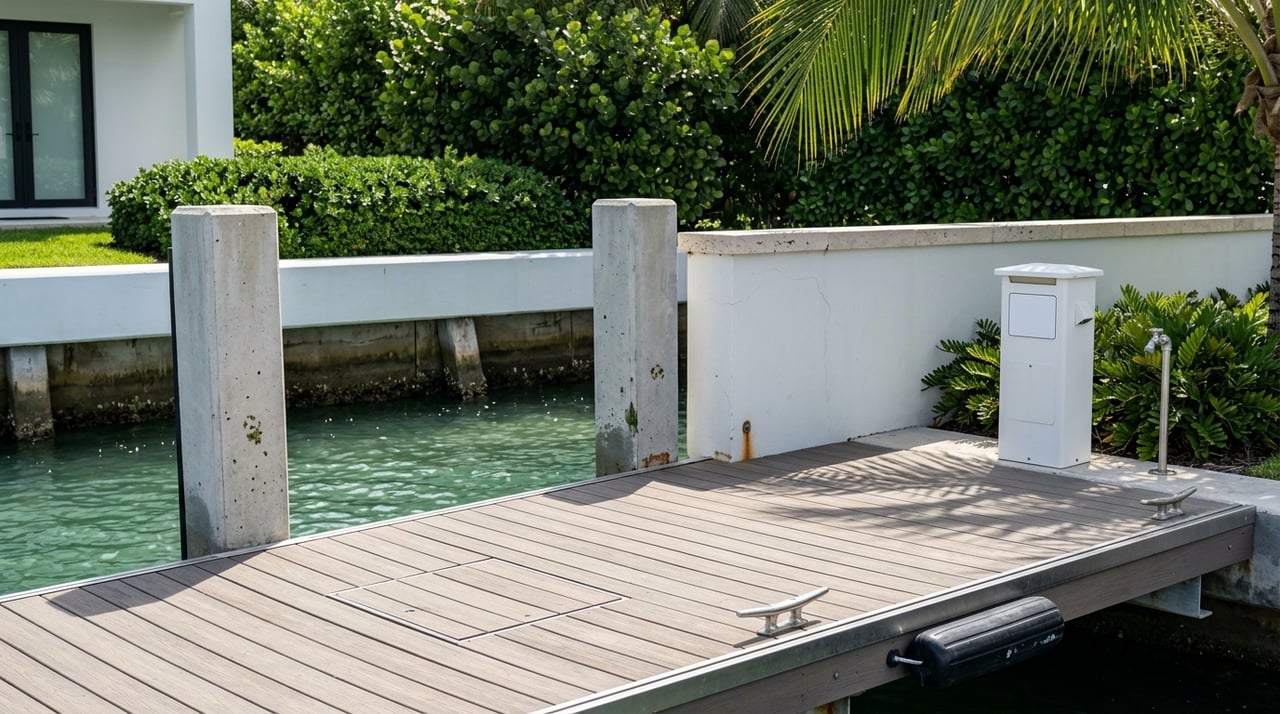
A waterfront address does not automatically mean easy boating access. In the Keys, value is often tied to legal dockability, usable depth, and access to open water as much as to the appearance of the lot.
Monroe County treats altered shorelines, canals, channels, basins, and unaltered shorelines differently. For many docking facilities, county rules require state and federal permits before a county building permit, and some docks must have at least 4 feet of water depth at mean low water at the terminal end plus continuous access to open water.
That is why one of the first questions to ask is simple: Can this property legally support the boat you actually own or plan to own? A dock may look appealing during a showing, but depth, width, turning radius, and route to open water matter just as much.
Dock design in the Keys is highly parcel-specific. Monroe County limits how docks, floating lifts, and boat shelters can be placed in relation to mangroves, seagrass, hardbottom, navigation areas, and side property lines.
For example, floating lifts must be in at least 4 feet of water at mean low water, cannot create navigation hazards, and may not be placed in manatee zones. Non-enclosed boat shelters are limited to cut-in slips, basins, or ramps.
The shoreline setback also matters. Monroe County caps how much of that setback can be occupied by accessory structures, generally prohibits enclosed structures in the shoreline setback except in limited cases, and requires stormwater management planning.
In other words, if you are buying with plans to add or enlarge a dock, lift, shelter, or shoreline feature, you should confirm what is already approved and what may still require review.
Many waterfront buyers picture trimming vegetation for a clearer view or easier access. In the Keys, mangrove trimming is regulated by the Florida Department of Environmental Protection, and some work requires a permit, professional mangrove trimmer, or DEP authorization.
That makes existing vegetation an important part of your due diligence. If a shoreline has mangroves, you should find out what work has already been permitted and what limits may apply in the future.
State rules also matter below the waterline. DEP says sovereignty submerged lands generally include areas waterward of the ordinary or mean high-water line, which is why some waterfront projects need state authorization, easements, or leases in addition to local permits.
Even if a dock is legal, the boating experience can still depend on local navigation conditions. Monroe County maintains hundreds of aids to navigation and regulatory markers across boating restricted areas to improve safety and reduce impacts to shallow-water resources.
The sanctuary also maintains more than 600 mooring buoys on a first-come, first-served basis. Anchoring on living coral is prohibited, and when no mooring buoy is available, anchoring is limited to sandy areas away from coral and seagrass outside no-anchor zones.
This matters because boating from your property is shaped by real-world conditions, not just by the map. A buyer should understand how shallow water, marked zones, habitat protection, and access routes may affect everyday use.
If you are considering a condo or marina-adjacent waterfront property, the dock situation may be governed by more than the deed. Local dockage can be affected by waitlists, advance payment rules, liveaboard categories, vessel size limits, draft limits, and pump-out compatibility.
That means association documents, marina rules, and assigned slip terms can matter as much as the residence itself. A unit with water views is not the same as a unit with reliable and usable dockage.
Waterfront ownership in the Keys also comes with wastewater responsibilities. Monroe County says advanced wastewater treatment was mandated throughout the island chain to eliminate septic tanks, illegal cesspits, and other ineffective systems.
NOAA also states that sanctuary waters are a No-Discharge Zone, and pump-out facilities are available at marinas and mooring fields throughout Monroe County. In some unincorporated marina facilities with 10 or more slips, or at least one liveaboard slip, Monroe County requires a fixed pump-out system.
For you, this means it is important to confirm whether the home is on sewer and whether any pump-out obligations apply to the property, slip, or marina arrangement.
Not every waterfront home in the Keys is canal-front. If the parcel is beachfront, Florida’s Coastal Construction Control Line program may apply.
DEP says these rules regulate structures and activities that can cause erosion, destabilize dunes, damage upland property, or interfere with public access. If you are considering renovations or shoreline work on a beachfront parcel, it is worth checking whether the property sits seaward of the CCCL.
The Keys are managed as an Area of Critical State Concern, and Monroe County says its ROGO and NROGO systems help steer growth toward infrastructure and away from environmentally sensitive areas and velocity zones. These systems are also tied to preserving hurricane evacuation clearance times.
For buyers, this is another reason future redevelopment or expansion should never be assumed. If your plan is to renovate, rebuild, or significantly alter a waterfront property, local growth and permitting rules should be part of the conversation early.
Before you move forward on a waterfront property in the Keys, focus on the questions that most directly affect value and usability:
In the Keys, two waterfront homes can look similar online and perform very differently in real life. One may offer straightforward dockage, strong access, and manageable insurance planning, while another may come with depth limits, permit hurdles, or added maintenance burdens.
That is why local context matters so much. When you understand dockability, navigation access, flood exposure, and permit requirements upfront, you can make a smarter decision and avoid expensive surprises after closing.
If you are weighing a waterfront purchase in Key West or the Lower Florida Keys, working with a team that knows how these details play out on the ground can make the process far clearer. To talk through your options with a locally rooted team, reach out to Bascom Grooms Real Estate.

Thank you, Key West!


Whether you are thinking of buying, selling, or investing in Florida Keys real estate, you can count on the experts at Bascom Grooms Real Estate. Contact us today to discuss all your real estate needs!