
The Rule That Kept Big Pine Key Affordable Just Ran Out
September 10, 2026
September 10, 2026
Ask anyone why a canal-front home on Big Pine Key or No Name Key costs a fraction of a comparable property closer to Key West, and you'll get the same answer: it's farther away. Less glamorous. A different kind of buyer.
That's part of the story. It's not the interesting part.
The Florida Keys overall posted a median sale price of $1.1 million in January 2026, according to Florida Realtors data. Meanwhile, recent market data puts Lower Keys home prices in the $550,000 to $750,000 range depending on the specific community and property type, with waterfront pushing that number higher and non-waterfront properties sitting well below it. That's not a small gap. It's the difference between a market that feels out of reach and one that feels like an actual option.
Distance from Key West explains some of it. It doesn't explain why Big Pine Key and its neighbor No Name Key, specifically, ran on a different set of rules than Sugarloaf, Cudjoe, Ramrod, or Summerland Key for the past twenty years. And it doesn't explain why that difference just became a live question again.
Big Pine Key and No Name Key sit inside the National Key Deer Refuge, a 9,000-acre federal refuge established in 1957 to protect the Key deer, a subspecies of white-tailed deer found nowhere else in the world. The deer were listed as endangered at the federal level in March 1967, after decades of hunting and habitat loss had reduced the population to an estimated 25 to 80 animals.
That listing eventually produced something with real teeth for property owners. Starting in the mid-1980s, Monroe County, the Florida Department of Transportation, and the U.S. Fish and Wildlife Service worked toward a Habitat Conservation Plan for the two islands, formalized through a Memorandum of Agreement in 1998. In June 2006, the Service issued a 20-year Incidental Take Permit built on that plan. The permit didn't ban development. It rationed it. Under the plan's Rate of Growth Ordinance allocations, the biological opinion authorized construction of up to 871 new residences over the full permit period, split between habitat and buffer areas, with strict limits on how and where.
That's a fixed ceiling on new housing stock across two islands for two decades. Ceilings like that show up in prices. Slower permitting, capped allocations, and extra biological review don't just protect deer. They constrain supply in a way that ordinary market forces on Sugarloaf or Cudjoe never had to contend with, because those islands were never inside the plan's boundary.
The 20-year permit had a clock on it, and this year the clock ran out.
Earlier this summer, Monroe County moved to let the Habitat Conservation Plan and its Incidental Take Permit lapse at the end of June rather than seek an extension. More than 100 residents turned out for a meeting hosted by Monroe County Mayor Michelle Lincoln to discuss what expiration would mean. Federal wildlife officials subsequently confirmed that core protections for the refuge's endangered species would continue, this time through the county's standard Permit Referral Process rather than the dedicated plan built specifically for these two islands.
That reassurance hasn't settled the question locally. Save Our Key Deer, a local advocacy group, has publicly pressed the county on whether a permit-by-permit review can substitute for the comprehensive framework it replaces. Keys Last Stand went further in a public letter to the county, pointing out a specific gap in the land development code: permits in areas previously covered by a habitat conservation plan are exempt from the standard referral review if mitigation for the associated impacts was already completed, and mitigation for the full scope of impact on Big Pine and No Name Keys had, in fact, already been completed. Read literally, that means a meaningful share of future permits on these two islands might not go through any special review at all, which is the opposite of what residents were told at that June meeting.
None of this changes the refuge itself. It changes what it takes to add a structure, expand a footprint, or clear land next to one.
For a buyer treating Big Pine or No Name as an entry point into Keys ownership, that's the fact worth sitting with. The mechanism that helped keep prices in check for twenty years just changed, and the replacement process is still being argued about in public meetings as of this summer.
This is where the comparison gets useful instead of just interesting.
Sugarloaf Key, Cudjoe Key, Ramrod Key, Summerland Key, and Little Torch Key were never inside the Big Pine/No Name Habitat Conservation Plan boundary. Their pricing has always reflected ordinary Lower Keys fundamentals: canal depth, open-water access, lot size, and distance to the Overseas Highway. Locals still use the highway's mile marker system for addresses out here, with numbers descending toward zero in Key West, so a property's mile marker tells you almost as much as its street name.
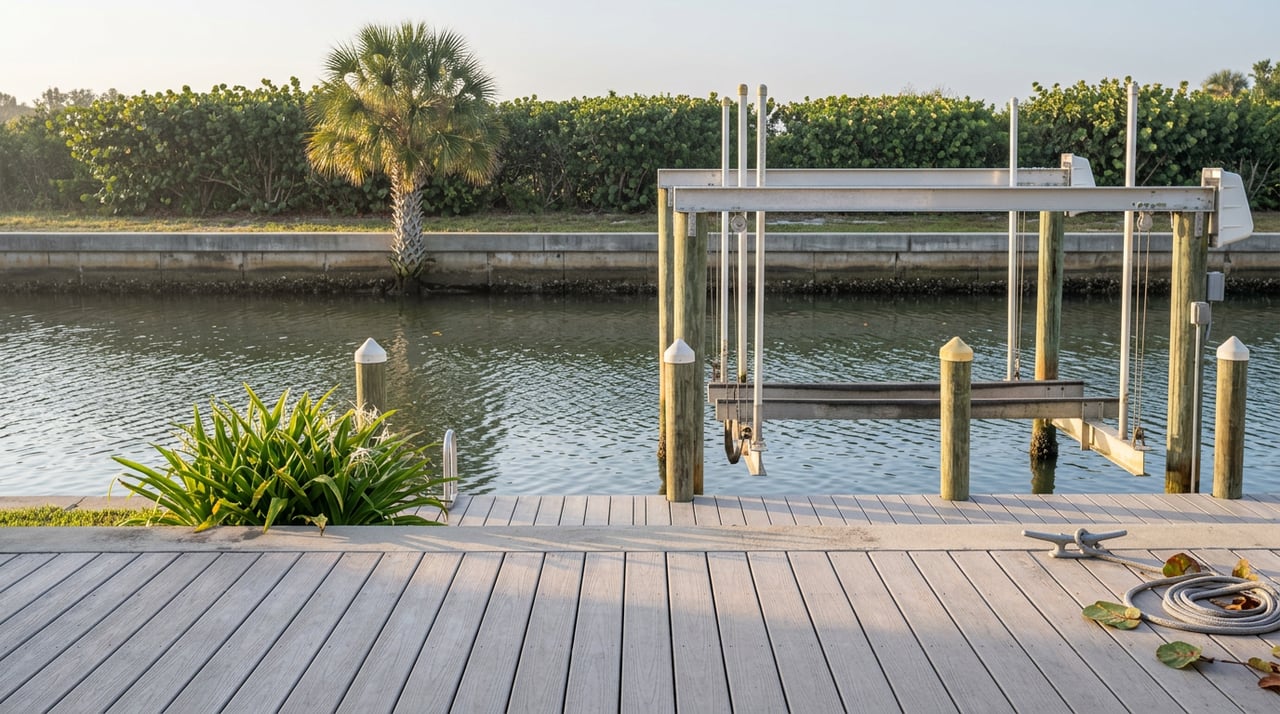
Within that band, a few named communities illustrate how much the real value driver is water access, not just which key you're on. Cutthroat Harbor Estates and Cudjoe Gardens on Cudjoe Key, Breezeswept Beach Estates on Ramrod Key, Pine Channel Estates on Big Pine Key, Sugarloaf Shores on Sugarloaf Key, and Jolly Roger Estates on Little Torch Key all sit within the same general price band, but a deep canal with open Atlantic or Gulf access commands a real premium over a shallower, land-locked lot two streets over. That's the comparison that actually matters once you're inside the affordable range: not which island is cheaper, but which canal gets you out to open water without waiting on tide.
| Community | Ever under the Big Pine/No Name HCP? | Primary value driver |
|---|---|---|
| Big Pine Key / No Name Key | Yes, until the plan expired in 2026 | Permit predictability, now in transition |
| Sugarloaf Key | No | Canal depth, open-water access |
| Cudjoe Key | No | Lot size, canal access |
| Ramrod Key | No | Canal-front vs. interior lots |
| Summerland Key | No | Distance to Overseas Highway, waterfront frontage |
| Little Torch Key | No | Open-water proximity |
There's a second mechanism worth flagging before anyone treats the Lower Keys as simply the cheap version of Key West.
Buying at $600,000 instead of $1.1 million doesn't buy you a proportionally smaller insurance bill. Homes throughout the Florida Keys typically carry three separate policies, windstorm, flood, and homeowners, and local insurance guidance puts a typical combined stack for a single-family Keys home in the range of $8,000 to $13,000 a year, with construction type, roof age, and elevation certificate doing most of the work in either direction. A concrete-block, stilted home with impact windows will price meaningfully better than an older wood-frame structure at grade, regardless of which island either one sits on. Condo buyers often see wind and flood coverage folded into the HOA fee, with only a separate contents policy needed for the interior.
The purchase price gap between the Lower Keys and the rest of Monroe County is real. The carrying cost gap is much smaller. Anyone running the numbers on a Lower Keys purchase should budget insurance as a Keys-wide cost, not a Lower Keys discount.
Put the two mechanisms together and the picture sharpens. The Lower Keys were never cheap because they're a lesser market. Big Pine and No Name Keys specifically were cheap because federal wildlife regulation put a lid on new construction for two decades, a lid that came off this summer under terms the county and local conservation groups are still hashing out in public. The rest of the Lower Keys were never under that lid at all, and their pricing has always tracked ordinary waterfront fundamentals. Knowing which mechanism produced the number you're looking at tells you more about where that number is headed than the number itself ever will.
If you're weighing a purchase in Big Pine Key, No Name Key, or anywhere else in the Lower Keys and want a clear read on what a specific property's permitting history and canal access actually mean for your plans, Bascom Grooms Real Estate has spent more than twenty-five years working this stretch of the island chain. Contact us and we'll walk the details with you before you make an offer, not after.
Is the National Key Deer Refuge itself going away? No. The refuge remains a permanent federal wildlife refuge managed by the U.S. Fish and Wildlife Service. What expired in 2026 was a separate county-level development permit tied to the refuge's endangered species, not the refuge boundary or its protections for the land itself.
Does a lower Lower Keys price mean lower insurance? Not proportionally. Construction type, roof age, elevation certificate, and flood zone drive Keys insurance costs more than purchase price does. Budget the same three-policy stack regardless of which Lower Keys community you're considering.
Should I ask about permitting before making an offer on Big Pine Key or No Name Key? Yes. With the Habitat Conservation Plan expired and the replacement review process still being debated locally as of this year, any buyer planning a renovation, addition, or new build on these two islands should confirm current permitting requirements with Monroe County directly before assuming what was true a year ago still applies today.

Thank you, Key West!
Whether you are thinking of buying, selling, or investing in Florida Keys real estate, you can count on the experts at Bascom Grooms Real Estate. Contact us today to discuss all your real estate needs!